Milia Removal in Seoul, Korea
Sreborn Skin Clinic Hongdae
Professional Treatment for Small White Facial Bumps in Hongdae & Hapjeong
Looking for milia removal in Seoul? Sreborn Skin Clinic Hongdae provides professional assessment and treatment for small white or yellow bumps commonly found around the eyes, cheeks, forehead, and nose.
Depending on the number, depth, and location of the milia, treatment may involve sterile extraction, a fine needle opening, electrocautery, or laser treatment. A skin assessment is important because milia can resemble closed comedones, sebaceous hyperplasia, syringomas, and other facial bumps.
What Are Milia?
Milia are small cysts containing keratin trapped beneath the skin’s surface. They commonly appear as firm, white or yellow bumps and are usually harmless.
Unlike acne, milia are not caused by a blocked pore filled with oil and generally do not become inflamed unless irritated.
Where Do Milia Commonly Appear?
Milia may develop on:
- Upper and lower eyelids
- Under-eye area
- Cheeks
- Forehead
- Nose
- Around the mouth
- Chin
- Other facial or body areas
Treatment around the eyes requires particular care because the skin is thin and delicate.
What Causes Milia?
Milia may develop without a clear cause or be associated with:
- Trapped keratin
- Natural skin-cell turnover
- Heavy or occlusive skincare products
- Sun-damaged skin
- Skin injury
- Burns
- Previous laser or resurfacing procedures
- Long-term use of certain topical products
- Healing after inflammation
Milia are not necessarily caused by poor hygiene.
Professional Skin Assessment
Before removal, the clinic may assess:
- Number and location of bumps
- Size and depth
- Skin thickness
- Under-eye anatomy
- Redness or inflammation
- Acne tendency
- Previous extraction attempts
- Current skincare products
- Recent laser or peeling treatments
- Risk of pigmentation or scarring
If the bumps do not appear to be milia, another diagnosis or treatment may be recommended.
How Are Milia Removed?
Common treatment methods include:
- Sterile extraction: A small opening is created so the keratin can be carefully removed.
- Electrocautery: Controlled electrical energy may be used for selected lesions.
- Laser treatment: A laser may be considered for multiple, deeper, or difficult-to-access milia.
- Topical treatment: Selected ingredients may support skin turnover and help reduce future formation.
The most appropriate method depends on the location, depth, number of lesions, and skin type.
Milia Extraction
During extraction, the skin is cleansed and a tiny opening is made over the milium. The keratin material is then removed using sterile instruments.
This differs from squeezing acne. Milia do not have a natural pore opening, so forceful pressure without creating a proper opening can damage the surrounding skin.
Laser Milia Removal
Laser treatment may be considered when milia are numerous, recurrent, deep, or located in areas where standard extraction is difficult.
Possible benefits include precise treatment and control of selected tissue. However, temporary redness, crusting, pigmentation changes, or small scars may occur.
Milia Around the Eyes
Milia frequently appear around the upper or lower eyelids.
Because eyelid skin is delicate, patients should avoid squeezing or puncturing bumps at home. Some eyelid bumps may be syringomas, cholesterol deposits, or other conditions rather than milia.
A professional assessment helps determine whether removal can be performed safely.
Milia vs. Closed Comedones
Milia and closed comedones can look similar, but they are different.
- Milia are small keratin cysts beneath the skin.
- Closed comedones are clogged pores associated with acne.
- Sebaceous hyperplasia involves enlarged oil glands.
- Syringomas are benign growths commonly found around the eyes.
Using acne treatments without confirming the diagnosis may not improve true milia.
Does Milia Removal Hurt?
Patients may feel a brief pinch or pressure during extraction.
Topical anesthesia may be used for sensitive areas, multiple lesions, laser treatment, or electrocautery. Tenderness afterward is usually temporary.
How Long Does Treatment Take?
Treatment time depends on:
- Number of milia
- Size and depth
- Treatment location
- Removal method
- Need for anesthesia
- Skin sensitivity
Several lesions may be removed during one visit, while extensive milia may require multiple sessions.
Milia Removal Recovery
Temporary reactions may include:
- Redness
- Mild swelling
- Tenderness
- Small scabs
- Pinpoint bleeding
- Temporary darkening
Most small treatment sites heal gradually, but recovery varies according to the removal method and individual skin response.
Milia Removal Side Effects
Possible side effects include:
- Redness
- Bruising
- Swelling
- Crusting
- Infection
- Post-inflammatory hyperpigmentation
- Hypopigmentation
- Small scars
- Incomplete removal
- Recurrence
Picking at the treatment sites can increase the risk of infection and scarring.
Can Milia Return?
Yes. Removal eliminates existing milia but does not guarantee that new ones will not form.
Recurrence may be influenced by skin type, product use, sun damage, healing patterns, and individual tendency.
Can I Remove Milia at Home?
Home removal is not recommended, especially around the eyes.
Needles, squeezing, and non-sterile tools can cause:
- Infection
- Bleeding
- Pigmentation
- Scarring
- Eye injury
- Damage to normal skin
Professional treatment is safer and also helps confirm that the bumps are actually milia.
How Can I Help Prevent Milia?
Prevention may include:
- Using gentle cleansing products
- Avoiding unnecessary heavy or occlusive skincare
- Choosing eye products suitable for your skin
- Applying sunscreen
- Avoiding aggressive picking
- Introducing retinoids only when professionally appropriate
- Following aftercare after laser or resurfacing procedures
Not all milia can be prevented.
Who May Need to Postpone Treatment?
Removal may need to be postponed for patients with:
- Active skin infections
- Open wounds
- Severe dermatitis
- Active cold sores near the area
- Recent aggressive laser treatment
- Recent chemical peeling
- Uncontrolled bleeding disorders
- Impaired healing
- Irritated or sunburned skin
Patients should disclose medications, allergies, and recent cosmetic procedures.
Milia Removal Aftercare
After treatment:
- Do not pick at scabs.
- Keep the area clean.
- Use recommended ointment or moisturizer.
- Avoid strong exfoliants temporarily.
- Delay retinoids and acids until healed.
- Avoid rubbing the eye area.
- Wear broad-spectrum sunscreen.
- Avoid applying makeup to open treatment sites.
- Follow the clinic’s instructions.
Contact the clinic if you develop worsening pain, spreading redness, pus, or prolonged swelling.
Milia Removal for International Patients
International patients should schedule treatment early enough for redness and small scabs to settle before important events or departure.
Tell the clinic about:
- Previous milia treatments
- Recent lasers or chemical peels
- Skincare allergies
- Blood-thinning medications
- Tendency to develop dark marks or scars
- Arrival and departure dates
Why Choose Sreborn Skin Clinic Hongdae?
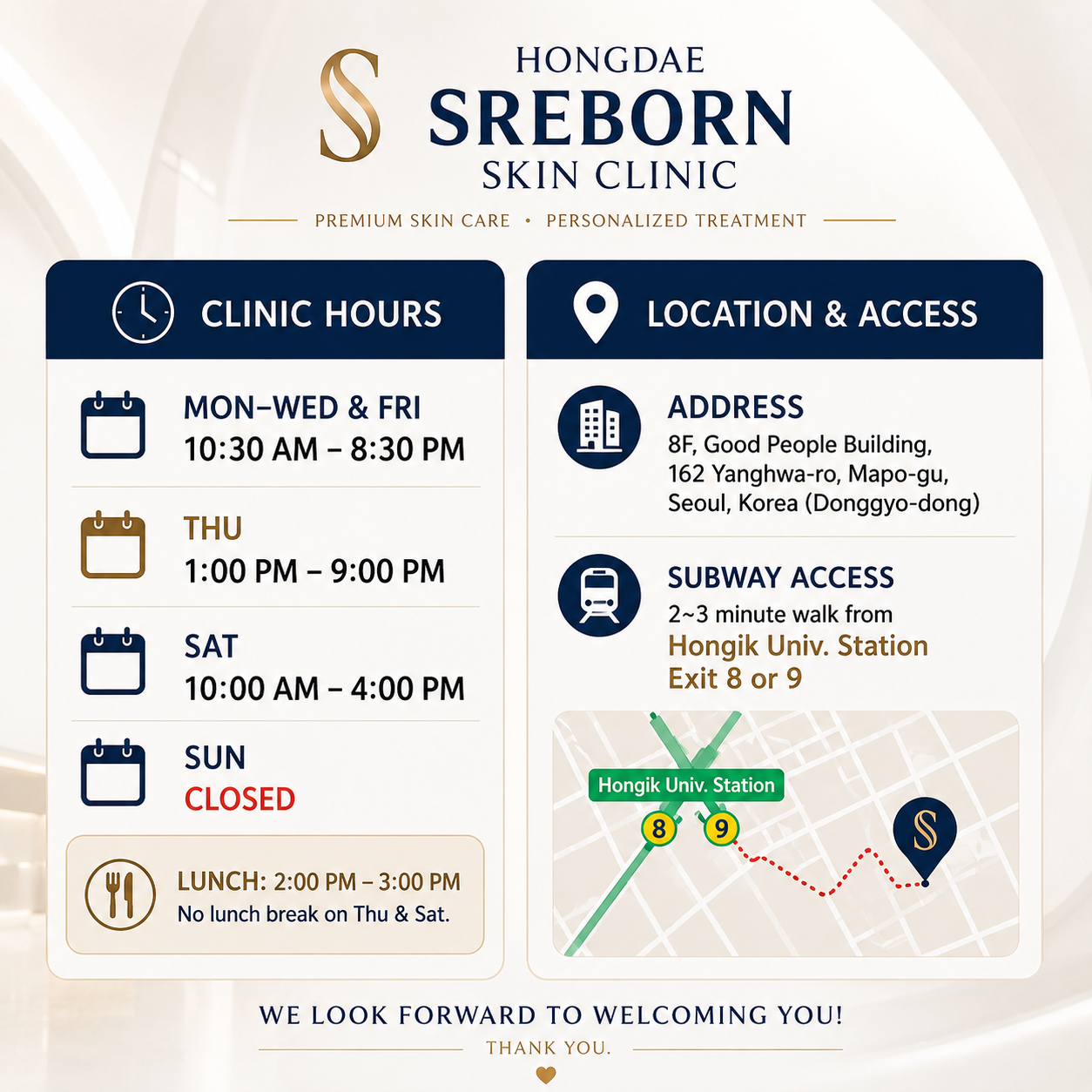
Sreborn Skin Clinic Hongdae provides personalized milia treatment for Korean residents and international visitors staying near Hongdae, Hapjeong, and Seoul.
Treatment planning emphasizes:
- Accurate assessment of facial bumps
- Sterile removal techniques
- Careful treatment around the eyes
- Appropriate method selection
- Pigmentation and scarring precautions
- Multilingual patient assistance
- Clear aftercare guidance
- Convenient Hongdae location
Frequently Asked Questions
Is milia the same as acne?
No. Milia are keratin-filled cysts, while acne comedones develop from clogged pores.
Can milia be squeezed?
Milia generally do not have a natural opening. Forceful squeezing can damage the skin and cause infection or scarring.
Can milia be removed in one session?
Many lesions can be removed during one visit. Numerous, deep, or sensitive-area milia may require additional sessions.
Does milia removal leave scars?
Small treatment sites often heal without noticeable scarring, but scars and pigmentation changes remain possible.
Can milia around the eyes be removed?
Yes, selected eyelid and under-eye milia may be treated after careful assessment.
Will milia return after removal?
Existing milia can be removed, but new lesions may develop later.
When can I wear makeup?
Avoid applying makeup over open or crusted treatment sites until the skin has sufficiently healed.
Book Milia Removal in Hongdae, Seoul
Contact Sreborn Skin Clinic Hongdae for professional assessment and removal of milia around the eyes, cheeks, forehead, nose, or other facial areas.