Nasal Capillary Treatment in Seoul, Korea
Sreborn Skin Clinic Hongdae
Personalized Laser Treatment for Visible Nose Vessels in Hongdae & Hapjeong
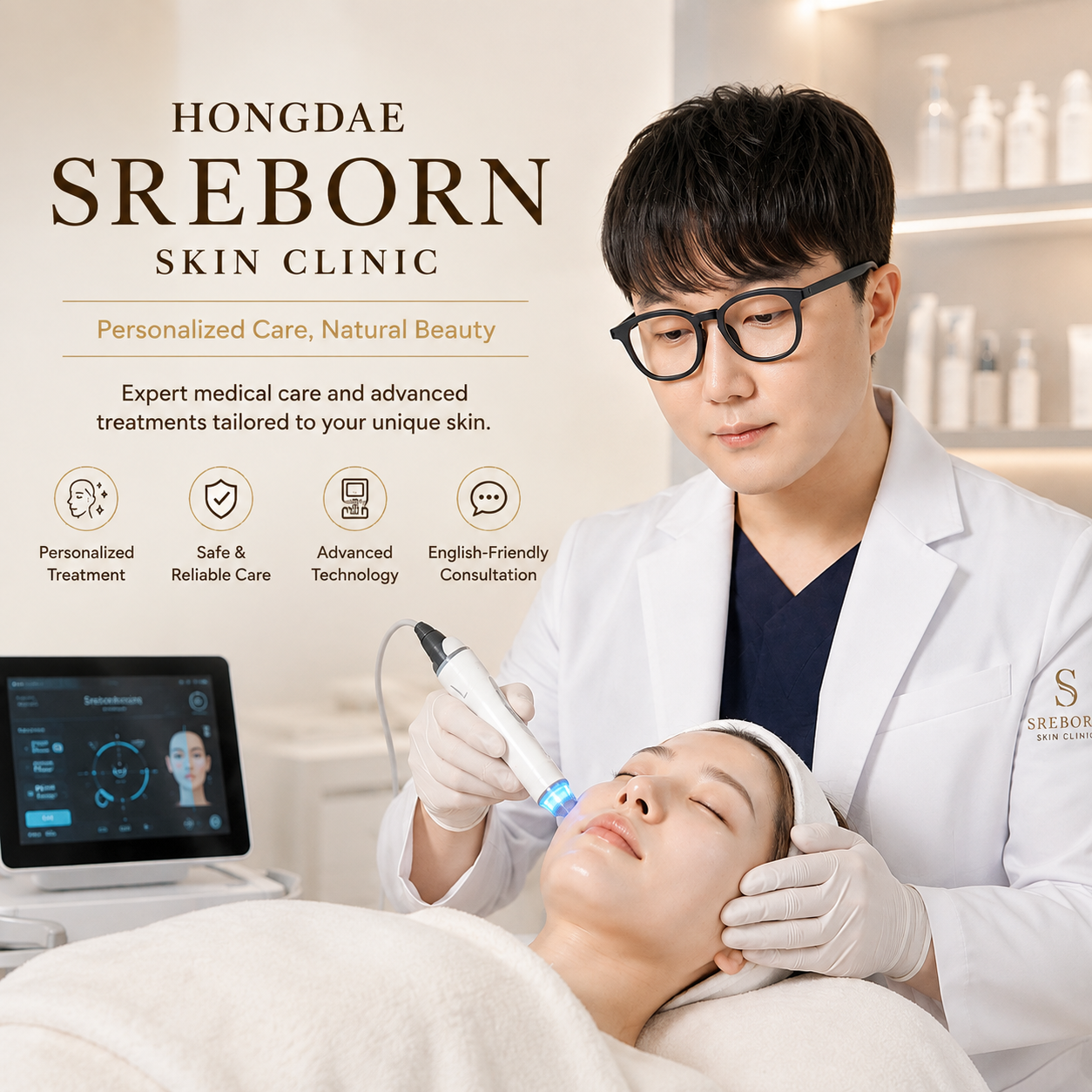
Looking for nasal capillary treatment in Seoul? Sreborn Skin Clinic Hongdae provides personalized treatment for visible red or purple vessels around the nose, nostrils, and upper cheeks.
Depending on the color, diameter, depth, and cause of the vessels, treatment may use a vascular laser or intense pulsed light. Multiple sessions may be required, particularly when facial redness, rosacea, or recurring vessel formation is also present.
What Are Nasal Capillaries?
“Nasal capillaries” commonly refers to visible superficial blood vessels around the nose. They may also be described as:
- Broken capillaries
- Facial telangiectasia
- Spider veins
- Visible facial vessels
- Nose veins
- Red vascular lines
These vessels are usually harmless but can create persistent redness around the nose.
What Causes Visible Vessels Around the Nose?
Nasal vessels may become more noticeable because of:
- Genetics
- Rosacea
- Chronic facial redness
- Sun exposure
- Aging
- Thin or sensitive skin
- Repeated rubbing or squeezing
- Temperature changes
- Alcohol consumption
- Smoking
- Previous skin inflammation
- Long-term topical steroid use
- Prior injury or surgery
Treatment can reduce visible vessels but may not eliminate the underlying tendency to develop new ones.
Professional Vascular Assessment
Before treatment, the clinic may evaluate:
- Vessel color
- Vessel diameter
- Depth beneath the skin
- Distribution around the nose
- Diffuse redness
- Rosacea symptoms
- Skin tone
- Skin sensitivity
- Recent tanning
- Current medications
- Previous vascular treatments
- History of pigmentation or scarring
This helps determine the appropriate device, wavelength, energy, and session schedule.
What Can Nasal Capillary Treatment Improve?
Treatment may be considered for:
- Thin red lines around the nose
- Purple or blue facial vessels
- Visible vessels beside the nostrils
- Redness across the nasal folds
- Small vascular clusters
- Spider-like facial vessels
- Selected rosacea-related vessels
- Residual redness after inflammation
Diffuse redness and individual visible vessels may require different treatment settings.
How Does Vascular Laser Treatment Work?
A vascular laser delivers light energy that is absorbed by the blood inside the vessel.
The resulting heat damages the targeted vessel, allowing the body to gradually clear it. The surrounding skin is protected as much as possible through careful wavelength selection, cooling, and conservative energy settings.
Which Lasers Treat Nasal Capillaries?
Depending on vessel color, depth, and skin tone, treatment may use:
- Pulsed-dye laser
- Long-pulsed Nd:YAG laser
- KTP or other vascular wavelengths
- IPL or broad-spectrum light
- Combination vascular treatment
No single device is ideal for every vessel. Small red capillaries require a different approach from deeper blue or purple vessels.
Nasal Capillaries and Rosacea
Visible vessels around the nose may occur alongside rosacea.
Other rosacea symptoms can include:
- Persistent facial redness
- Flushing
- Burning or stinging
- Sensitive skin
- Acne-like bumps
- Redness triggered by heat, alcohol, or spicy food
Laser can reduce visible vessels, but it does not permanently cure rosacea. Skincare, trigger management, and medical treatment may also be needed.
Nasal Capillaries vs. General Facial Redness
Individual nasal vessels appear as visible lines or branching patterns. General redness is more diffuse and may involve the nose, cheeks, or central face.
Laser settings that target individual vessels may differ from those used for widespread redness. Some patients need a combination approach.
Does Nasal Capillary Treatment Hurt?
Patients may feel:
- Brief snapping
- Heat
- Stinging
- Tingling
- Temporary sensitivity
Cooling or numbing may be used when appropriate. Patients should report excessive pain or heat immediately.
How Many Sessions Are Needed?
The number of sessions depends on:
- Vessel size and depth
- Color
- Number of vessels
- Skin tone
- Rosacea activity
- Treatment device
- Individual response
Some small vessels improve after one treatment, while extensive or resistant vessels may require several sessions.
When Will I See Results?
Some vessels may appear lighter immediately, while others darken temporarily before gradually fading.
The final response should be evaluated after swelling, redness, or bruising has settled. Additional treatment may be recommended after the skin has fully recovered.
Can Nasal Capillaries Return?
Treated vessels may fade, but new vessels can form over time.
Recurrence may be influenced by:
- Rosacea
- Genetics
- Sun exposure
- Aging
- Smoking
- Alcohol
- Temperature extremes
- Repeated irritation
Sunscreen, gentle skincare, and trigger management may help maintain results.
Possible Side Effects
Temporary reactions may include:
- Redness
- Swelling
- Warmth
- Tenderness
- Bruising or purpura
- Temporary darkening
- Mild crusting
Less-common risks include:
- Burns
- Blistering
- Hyperpigmentation
- Hypopigmentation
- Infection
- Scarring
- Skin-texture changes
- Incomplete vessel clearance
Risk can vary according to skin tone and recent sun exposure.
Who May Need to Postpone Treatment?
Treatment may need to be postponed or modified for patients with:
- Active skin infections
- Open wounds
- Severe rosacea flare
- Recent tanning or sunburn
- Certain photosensitizing medications
- Impaired healing
- Pregnancy
- A history of abnormal scarring
- Recent aggressive laser or chemical peeling
All medications, skin conditions, and previous treatments should be disclosed.
Nasal Capillary Treatment Aftercare
After treatment:
- Use a gentle cleanser.
- Apply moisturizer as advised.
- Wear broad-spectrum sunscreen.
- Avoid rubbing or squeezing the nose.
- Avoid saunas and hot baths temporarily.
- Limit intense exercise if flushing occurs.
- Avoid strong acids and retinoids until irritation settles.
- Do not pick at crusting.
- Follow the clinic’s instructions.
Contact the clinic if you experience blistering, increasing pain, spreading redness, or signs of infection.
Treatment for International Patients
International patients should share information about:
- Rosacea or frequent flushing
- Previous vascular lasers
- Current skincare and medications
- Recent tanning
- Important events
- Arrival and departure dates
Schedule treatment early enough for possible redness, swelling, or bruising to settle before flights or special occasions.
Why Choose Sreborn Skin Clinic Hongdae?
Sreborn Skin Clinic Hongdae provides personalized vascular treatment for Korean residents and international visitors in Hongdae, Hapjeong, and Seoul.
Treatment planning emphasizes:
- Professional vessel assessment
- Appropriate laser selection
- Customized energy settings
- Skin-tone consideration
- Rosacea-aware treatment planning
- Multilingual patient assistance
- Clear aftercare guidance
- Convenient Hongdae location
Frequently Asked Questions
Can laser permanently remove nasal capillaries?
A treated vessel may fade significantly, but new vessels can develop over time.
Is one session enough?
Some small vessels respond after one session, while multiple or deeper vessels may need several treatments.
Does treatment cause bruising?
Certain vascular lasers can cause temporary purple bruising or purpura. The likelihood depends on the device and treatment settings.
Can nasal capillaries be caused by rosacea?
Yes. Visible vessels around the nose commonly occur with rosacea and persistent facial redness.
Can skincare remove broken capillaries?
Skincare may reduce irritation and redness but generally cannot remove an established visible vessel.
Is vascular laser safe for darker skin?
Treatment may be possible, but wavelength and energy selection require additional caution to reduce pigment changes.
Can I wear makeup after treatment?
Makeup may be applied after the skin surface has recovered and the clinic approves it. Avoid makeup over open or crusted areas.
Book Nasal Capillary Treatment in Hongdae
Contact Sreborn Skin Clinic Hongdae for personalized treatment of visible red or purple vessels around the nose, nostrils, and upper cheeks.